

What Happens When a Venue Becomes a Cultural Brand?
Why the most valuable venues may be those that build audiences, ideas and recurring cultural properties of their own.
A venue can be successful without having much of an identity.
It can have an impressive building, an excellent location, strong technical infrastructure and a calendar full of concerts, conferences, theatre, private events and touring productions.
Commercially, that may be enough.
But there is another category of venue that becomes harder to describe simply in terms of capacity, facilities or programming.
People begin to associate it with a particular point of view.
They trust what happens there.
Artists want to be part of it.
Audiences return not only because they recognise the performer, but because they recognise the institution.
Certain festivals, communities, rituals and experiences start to belong to the place itself.
At that point, the venue is no longer functioning only as infrastructure.
It is becoming a cultural brand.
And that shift has consequences far beyond marketing.
A full calendar is not the same as cultural equity
Much of venue economics is understandably built around utilisation.
How often is the space occupied?
How much does each event generate?
How efficiently can the calendar be filled?
What can the venue earn from ticketing, hospitality, food and beverage, sponsorship, rentals and ancillary spending?
These are important questions. An empty venue cannot survive on cultural relevance alone.
But utilisation tells us how efficiently a physical asset is being used.
It does not tell us whether that activity is making the venue itself more valuable in the minds of audiences.
Consider two venues.
The first hosts hundreds of events every year. Promoters bring their own artists, audiences, brands, marketing and creative concepts. The shows sell well and the venue earns its share.
Then everyone leaves.
The promoter keeps the audience relationship. The artist keeps the fan relationship. The event brand keeps the memory.
The venue keeps the room.
Now imagine another venue that still hosts external promoters, but also creates a few things of its own.
A festival.
A commissioning programme.
A music series.
A children's cultural property.
A residency.
An emerging artist platform.
A programme audiences encounter year after year.
Something very different begins to happen.
The venue starts accumulating audience knowledge, creative relationships, institutional memory, intellectual property and trust.
These can compound.
That is where programming begins to become more than expenditure.
It starts becoming an asset.
The venue as publisher
Perhaps the most useful analogy is not another venue.
It is a publisher.
A great magazine is not valuable because it owns paper.
A record label is not valuable because it owns a recording studio.
A media platform is not valuable because it possesses screens.
Their value comes from selection, judgment, audience relationship and intellectual property.
A strong cultural venue can operate in much the same way.
The building is the infrastructure. Programming is the editorial function.
Every choice communicates something.
Who is invited?
Which art forms are taken seriously?
Which communities are given space?
What deserves to return?
Which ideas are commissioned instead of simply purchased?
What does the institution introduce audiences to that they might not have discovered themselves?
Over time, those choices form a point of view.
And point of view is one of the foundations of cultural identity.
For relatively young cultural markets such as the UAE, established institutions elsewhere are useful not because their models should simply be replicated, but because they show how cultural identity accumulates over time.
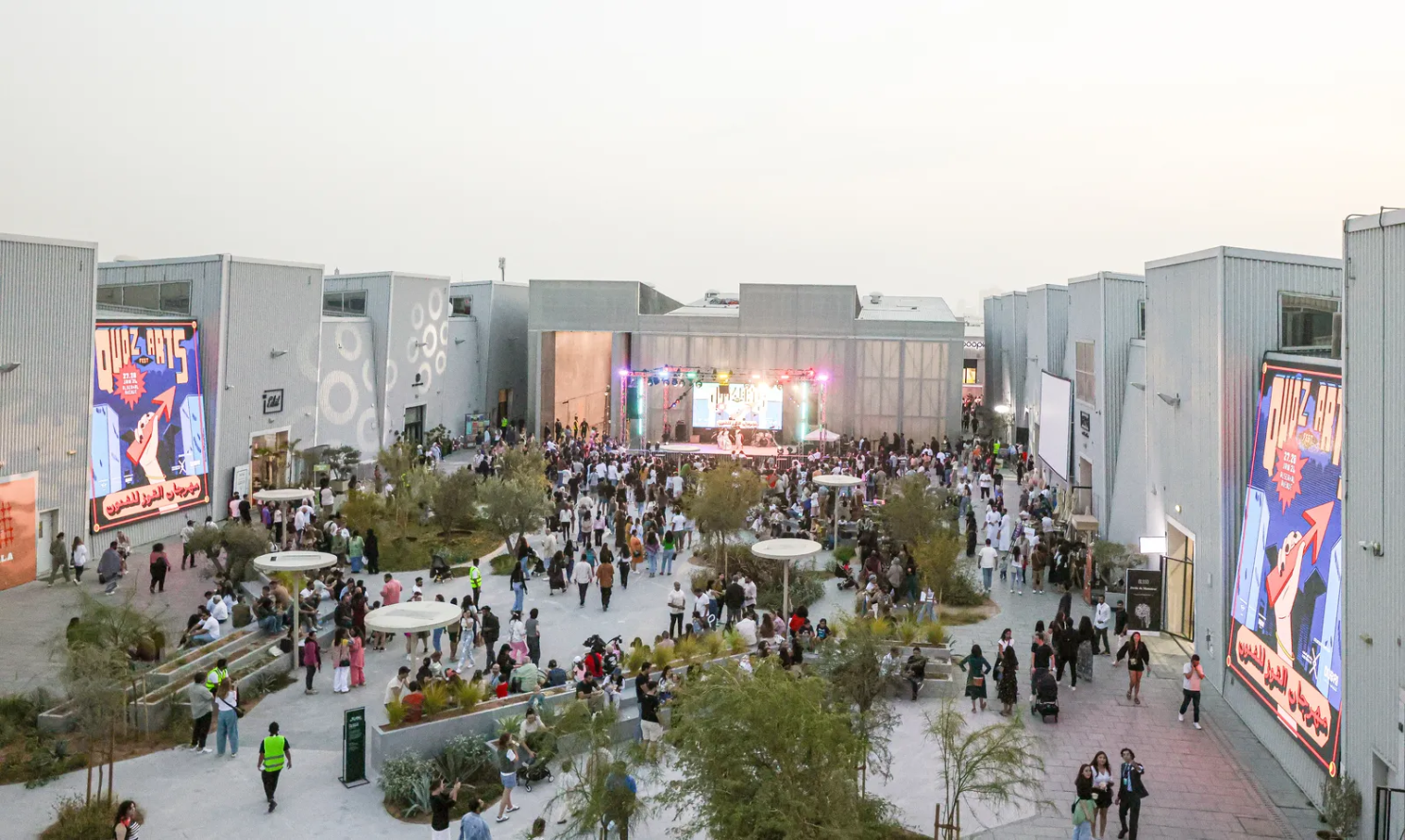
The interesting question is not whether the UAE should create its own version of Southbank Centre, NCPA or Roundhouse.
It is what each example reveals about how an institution becomes more than the building it occupies.
Southbank Centre: when the venue owns the idea, not the line-up
Southbank Centre's Meltdown festival is one of the clearest examples.
Meltdown began in 1993. Each edition invites a different artist to curate a programme around their own influences, interests and artistic world.
Over the years, curators have included David Bowie, Yoko Ono, Patti Smith, Grace Jones, Nile Rodgers, Little Simz and, in 2026, Harry Styles. Southbank Centre describes it as the world's longest-running artist-curated festival.
What makes Meltdown interesting is not simply that major artists participate.
It is the structure.
The curator changes.
The programme changes.
The cultural moment changes.
But the idea belongs to Southbank Centre.
After more than three decades, Meltdown carries meaning before its full line-up is even announced.
That is cultural intellectual property.
The venue does not have to start from zero every year because the audience already understands the proposition.
It is a useful distinction for anyone developing venues or cultural programmes.
Booking a famous artist creates an event.
Creating a format that can survive thirty years of changing artists creates something else entirely.
NCPA: when curation becomes part of institutional identity
Mumbai's National Centre for the Performing Arts offers a different model.
Its identity has not been built around one dominant festival.
Instead, it has developed a portfolio of recurring, thematically curated programmes across Indian music, dance, theatre, jazz and Western classical music.
Its Indian music programme includes properties such as Bandish, focused on the works of important composers; Sama'a, centred on Sufi music; Saz-e-Bahar, devoted to Indian instrumental music; Aadi Anant, exploring the guru-shishya tradition; and Living Traditions, which brings attention to regional forms.
NCPA says its thematically curated Indian music festivals have been developed over more than a decade. Bandish itself reached its 16th year in 2026.
This is a particularly useful example because it shows why curation is not the same thing as booking.
Another promoter could hire the same vocalist.
Another theatre could present the same instrumentalist.
What NCPA owns is the context.
Bandish gives a reason for those artists to appear together.
Sama'a gives another.
Aadi Anant creates another curatorial frame.
That context influences how audiences understand the performance.
Over time, it also tells audiences what the institution cares about.
This is where a cultural brand starts becoming deeper than visual identity.
It is not a colour palette, a logo or a communication strategy.
It is a pattern of decisions.
Prithvi Theatre: when people develop a relationship with the place itself
Prithvi Theatre in Mumbai illustrates something slightly different.
It was established in 1978 with a specific purpose: to support and develop professional theatre.
That purpose affected the physical space, the programming, the relationship with performers and even the way audiences experience the venue.
Prithvi describes itself as a catalyst for theatre, built around an open and welcoming approach, respect for performance and practical support for theatre practitioners. Today it programmes performances throughout the year across Hindi, English, Marathi and Gujarati theatre, alongside music and dance.
But anyone familiar with Prithvi understands that its identity cannot be reduced to the auditorium.
The café matters.
The courtyard matters.
The theatre community around it matters.
The memory of previous performances matters.
Its annual festival matters.
The behaviour of the audience matters.
The venue has become part of Mumbai's theatre culture rather than simply a container for it.
This points to something important.
A cultural brand does not always require a piece of intellectual property with a trademarkable name.
Sometimes what compounds is a community and a way of doing things.
People know what Prithvi represents.
That is extraordinarily difficult to manufacture through advertising.
It has to be lived.
Roundhouse: when the mission becomes the brand
London's Roundhouse provides another variation.
It is a major performance venue, but its identity is inseparable from its work with young creatives.
Alongside commercial music and performance, Roundhouse operates an extensive creative programme for people aged 11 to 30 across music, performance, broadcasting, film, spoken word, dance and entrepreneurship.
Its 2026 impact report describes the organisation as both an independent multi-arts venue and a youth charity, working with more than 10,000 young people annually.
That makes the institution culturally legible in a way that a generic performance venue is not.
The point is not simply:
Good artists perform here.
It is also:
This institution believes it has a role in developing the next generation of creative people.
That mission shapes its programming, partnerships, community and reputation.
And it demonstrates an important principle.
Cultural identity does not have to come from a festival.
It can come from purpose.
A venue becomes more distinctive when audiences understand not only what happens there, but why the institution exists.
NMACC: watching a cultural identity being built
Nita Mukesh Ambani Cultural Centre in Mumbai is a useful contemporary example precisely because it is much newer.
It opened in 2023, so it would be premature to place it alongside institutions that have accumulated cultural equity over several decades.
But that makes it interesting to watch.
Major international productions, celebrity appearances and high-profile programming can establish visibility quickly.
The harder task is building properties audiences eventually associate specifically with the institution.
Its annual Bachpan children's festival is an early example of this.
The festival brings together theatre, music, dance, storytelling, visual art, workshops and participatory experiences for children and families.
In 2025, NMACC and Reliance Foundation collaborated with Dadu, Children's Museum of Qatar, on Light Atelier. In 2026 the collaboration continued with Emotions Lab, again presented as part of the annual Bachpan programme.
The interesting question is not whether Bachpan is already a major cultural property.
It is whether it can become one.
If families begin to anticipate it annually, if artists and partners begin developing work specifically for it, and if the programme gains a recognisable identity over successive editions, then NMACC begins owning something more valuable than a collection of individual performances.
It begins owning an audience relationship.
That is how cultural equity starts.
So what actually makes a venue a cultural brand?
These examples are very different.
Meltdown is recurring intellectual property.
NCPA is curatorial consistency.
Prithvi is community and institutional culture.
Roundhouse is mission.
NMACC is beginning to build recurring audience propositions.
That difference is important because the lesson is not:
Every venue should launch a festival.
The lesson is that the strongest venues eventually develop something audiences can associate with the institution itself.
That something might be:
a curatorial point of view,
a recurring property,
a community,
a mission,
a particular audience,
a commissioning philosophy,
an artistic territory,
or a recognisable way of experiencing culture.
Without that, a venue can still be extremely successful.
But it remains more substitutable.
If every event could move into another building of similar capacity tomorrow without changing its meaning, the venue itself may have created relatively little cultural equity.
This changes the commercial equation too
Cultural identity is often discussed as though it sits in opposition to commercial thinking.
It does not have to.
A venue with an audience relationship of its own holds different assets from one that relies completely on outside promoters.
It may gradually accumulate:
direct audience data,
returning communities,
recognisable programming properties,
artist relationships,
institutional partnerships,
sponsor opportunities,
content,
archives,
membership potential,
hospitality opportunities,
and intellectual property.
These create different commercial possibilities.
A sponsor considering an annual partnership with Meltdown is buying into something different from a sponsor attached to an isolated concert.
A partner working with an institution known for children's culture, emerging talent or contemporary regional music gains a context around the partnership.
Context is valuable because it answers a question brands increasingly struggle with:
Why are we here?
Strong cultural properties provide an answer.
But original programming also means original risk
There is a reason venue rental remains attractive.
When an external promoter hires a venue, much of the programming, marketing and financial risk sits with somebody else.
When the venue develops its own property, it assumes more responsibility.
It needs to understand its audience.
It needs cultural judgment.
It needs the right talent.
It needs marketing.
It needs partnerships.
It needs patience.
And it needs to know when an idea is not working.
Not every "signature event" becomes an asset.
Some simply become expensive annual obligations.
Repetition alone does not create cultural value.
Recognition has to be earned.
The right strategic question therefore is not:
What festival should this venue launch?
It is:
What could this institution credibly build that becomes more valuable each time it returns?
The answer may not even be an event.
Why this question matters particularly now in the UAE and the wider Gulf
This conversation feels particularly relevant in the UAE and across the wider Gulf because cultural and entertainment infrastructure is expanding quickly.
There is increasing access to world-class venues, touring productions, major artists, festivals, hospitality developments and cultural districts.
That growth creates enormous opportunity.
But infrastructure and cultural identity develop at very different speeds.
A building can open on a particular date.
A cultural institution cannot.
Institutional identity emerges more slowly through programming choices, relationships, successes, failures, returning audiences and accumulated memory.
This may become one of the more interesting questions for cultural development across the region over the next decade.
It will no longer be enough to ask:
How many venues do we have?
How many international artists came?
How many events did we host?
How many people attended?
There is another level of question:
What has been created here that could only really belong here?
That is a much harder benchmark.
It is also a much more interesting one.
The hospitality sector has an opportunity here too
This thinking does not apply only to concert halls or cultural institutions.
In the UAE especially, where hospitality and destination development are such important parts of the wider experience economy, hotels, resorts, restaurants and mixed-use destinations increasingly use music and entertainment as part of the guest experience.
Much of it is still purchased operationally.
A singer tonight.
A DJ tomorrow.
A band at brunch.
Then another artist next week.
There is nothing inherently wrong with this.
Entertainment often needs to perform a simple function: create atmosphere.
But certain properties can go further.
Instead of asking only:
Who should we book?
They can ask:
What should music mean here?
A resort could develop a recognisable seasonal music programme.
A restaurant group might create a recurring format connecting regional musicians with food and storytelling.
A hotel could commission performances linked to its architecture, neighbourhood or cultural context.
A wellness property could develop a sophisticated programme around sound and acoustic experience.
The distinction is subtle.
One model purchases entertainment.
The other gradually builds cultural memory around a place.
For hospitality businesses competing increasingly on experience, particularly in a market as competitive as the UAE, that difference could become commercially meaningful.
The ultimate test is surprisingly simple
There is perhaps one question that reveals whether a venue has developed genuine cultural identity.
If you removed the building, would anything culturally valuable remain?
Would an audience still recognise the festival?
Would a community still exist?
Would the curatorial point of view mean something?
Would artists still want to be associated with the institution?
Would a programme have an identity strong enough to travel elsewhere?
Would people miss what the institution contributed, rather than simply miss having a room in that location?
If the answer is yes, the venue has created something beyond physical infrastructure.
It has created cultural equity.
The most valuable venues of the future may therefore not be those with the fullest calendars or the most impressive architecture.
They may be the places where audiences develop a sense of trust.
A belief that whatever happens there has been chosen for a reason.
And once audiences begin to trust the institution's judgment, something powerful happens.
The venue no longer only responds to existing demand.
It gains the ability to introduce new artists, new ideas and new experiences.
It can begin to create demand.
That is when a venue stops being simply a place where culture happens.
It becomes part of the culture itself.
Kavya Yadav writes The Cultural Economy and leads Viva Music, a UAE-based music consultancy working across artist strategy, live entertainment sourcing and curation, hospitality and cultural programming, brand partnerships, and music-led experiences.
Originally published in The Cultural Economy on LinkedIn on September 1, 2026.